
Choosing exterior surface materials for the climate
Consider sun, rain, drainage, joints and maintenance before specifying an exterior surface.
Terra Editorial · 2026-09-16T17:00:00.000Z
Start with exposure, not a material name
Exterior surfaces must handle direct sun, driven rain, trapped humidity and temperature change. Begin with location, water exposure and traffic rather than choosing by appearance alone.
Design drainage and joints
No material performs well in standing water. Define falls, drainage paths, edges and joints to suit the format. Timber, stone, metal, fibre cement and composite surfaces each need different spacing and support details.
Understand how the finish will weather
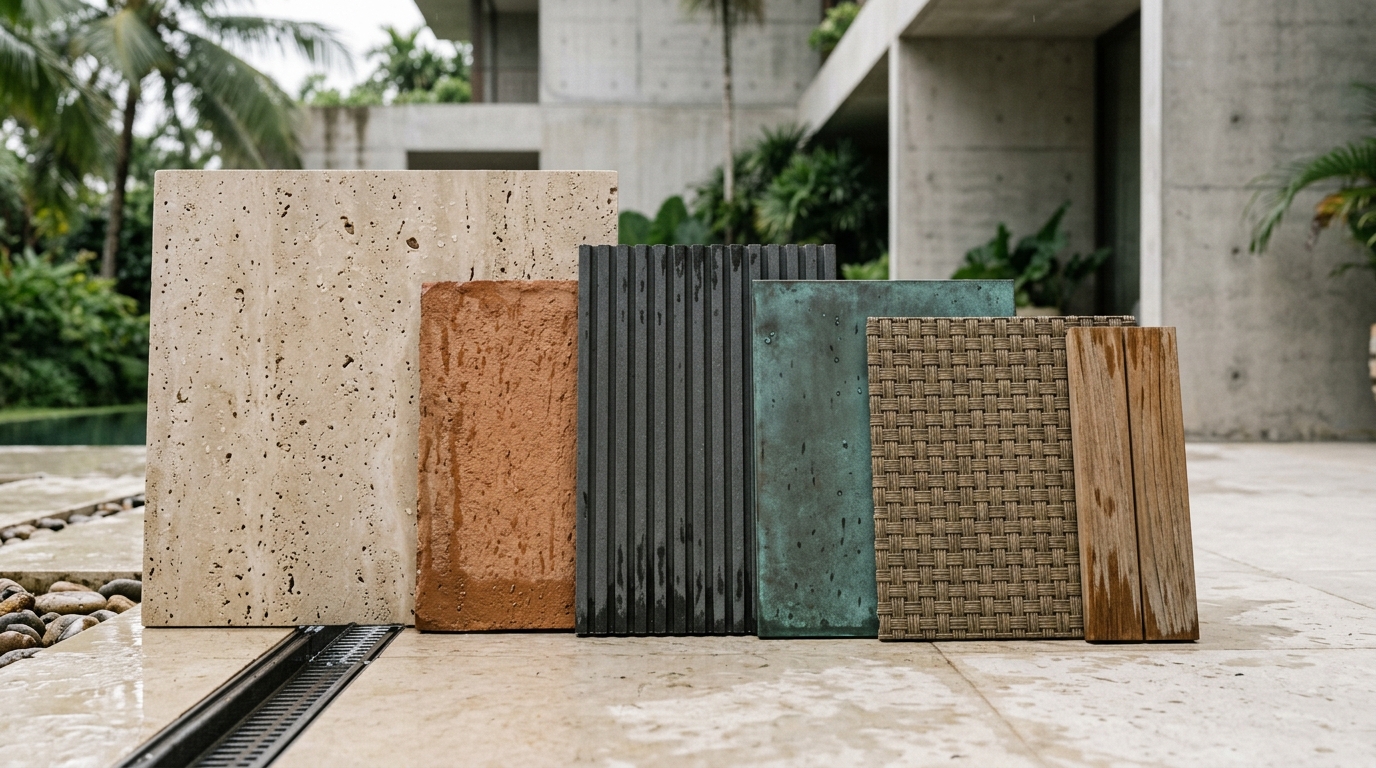
Colour and texture change under UV and weather. Ask for an aged sample or review an outdoor mock-up so the team can assess real weathering rather than relying only on a new sample viewed indoors.
Plan care at specification stage
Record cleaning cycles, local repair methods and approved products in the handover documents. A suitable material is not one that needs no care; it is one the project can maintain consistently.